
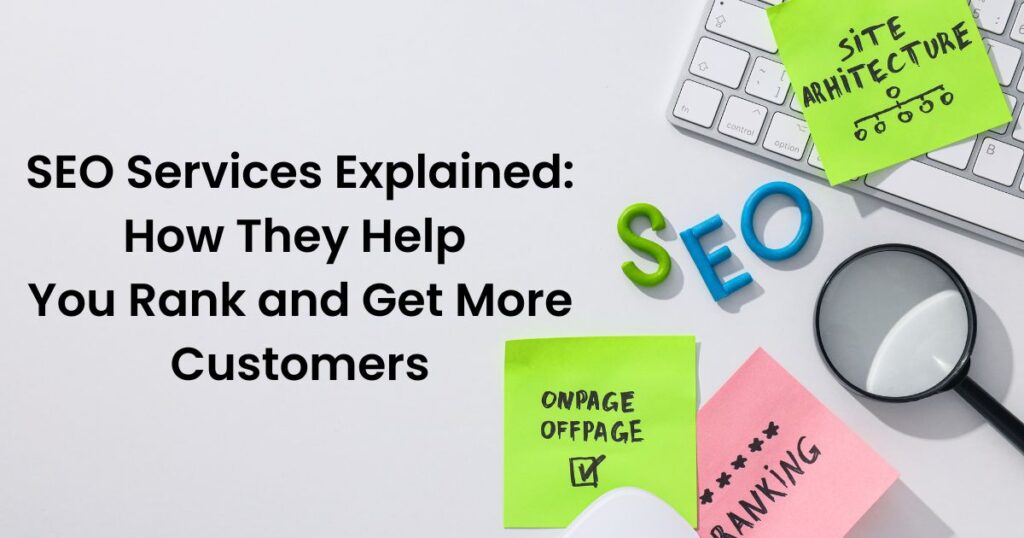
In today’s digital world, showing up on the first page of Google is no longer a luxury—it’s a necessity. Whether you run a local business, an eCommerce store, or a service-based company, your potential customers are already searching for what you offer. The question is: will they find you or your competitor?
That’s where SEO (Search Engine Optimization) services come into play.
If you’ve ever wondered what SEO services include and how they actually help bring in more customers, this blog post breaks it down clearly and simply.
🔍 What Are SEO Services?
SEO services refer to a set of strategies and techniques used to improve your website’s visibility on search engines like Google, Bing, and Yahoo. The ultimate goal is to rank higher in organic (non-paid) search results for keywords that are relevant to your business.
These services are typically offered by SEO professionals or digital marketing agencies and include tasks such as:
- Keyword Research: Finding the right words and phrases your ideal customers are using in their searches.
- On-Page SEO: Optimizing your website’s pages—titles, meta descriptions, headers, and content—for targeted keywords.
- Technical SEO: Improving the behind-the-scenes elements like page speed, mobile responsiveness, and site structure.
- Off-Page SEO: Building backlinks from reputable websites to increase your domain authority and credibility.
- Local SEO: Optimizing your Google Business Profile and citations to appear in local searches and Google Maps.
- Content Optimization: Ensuring your content not only ranks but also engages and converts visitors.
A well-rounded SEO service package addresses both the technical and creative sides of search engine optimization to drive real results.
🚀 Why SEO Services Matter
Google’s algorithm uses over 200 ranking factors to determine which websites appear at the top of the search results. While it’s impossible to control every variable, SEO services focus on improving the most important ones.
Here’s how they help you rank higher:
- Relevance: By optimizing for the right keywords, your site becomes more aligned with what users are actually searching for.
- Authority: High-quality backlinks, expert content, and strong branding help search engines trust your site.
- User Experience (UX): Fast-loading, mobile-friendly websites that are easy to navigate tend to perform better in rankings.
All of these factors signal to search engines that your website deserves a top spot, making it easier for customers to find you before they find your competitors.
💼 How SEO Services Help You Gain Customers
Many business owners wonder, “Will SEO really bring me more customers?” The short answer is: yes—when done correctly. Here’s how:
1. More Targeted Traffic
SEO brings in visitors who are actively searching for your products or services. These are high-intent users, meaning they’re more likely to convert into paying customers.
2. Higher Credibility
Websites that appear at the top of Google results are often viewed as more credible and trustworthy by users. Ranking well builds brand authority.
3. Improved User Experience
SEO involves optimizing your site’s structure and design, which leads to a smoother, faster, and more enjoyable experience for your visitors.
4. Long-Term Results
Unlike paid advertising, which stops working the moment you stop paying, SEO builds a sustainable flow of organic traffic over time.
5. Cost-Effective Marketing
Once your SEO strategy is in place, the cost per lead tends to decrease over time, making SEO one of the most cost-efficient digital marketing services available.
🧩 What to Look for in an SEO Service Provider
Choosing the right SEO partner is critical to your success. Here are some signs of a trustworthy provider:
- Clear reporting and regular updates
- A customized SEO strategy based on your business goals
- Transparent pricing with no hidden fees
- Ethical practices (no black-hat SEO or spammy tactics)
- Proven track record and client testimonials
Avoid anyone who promises “#1 rankings overnight”—SEO is a long-term strategy, not a quick fix.